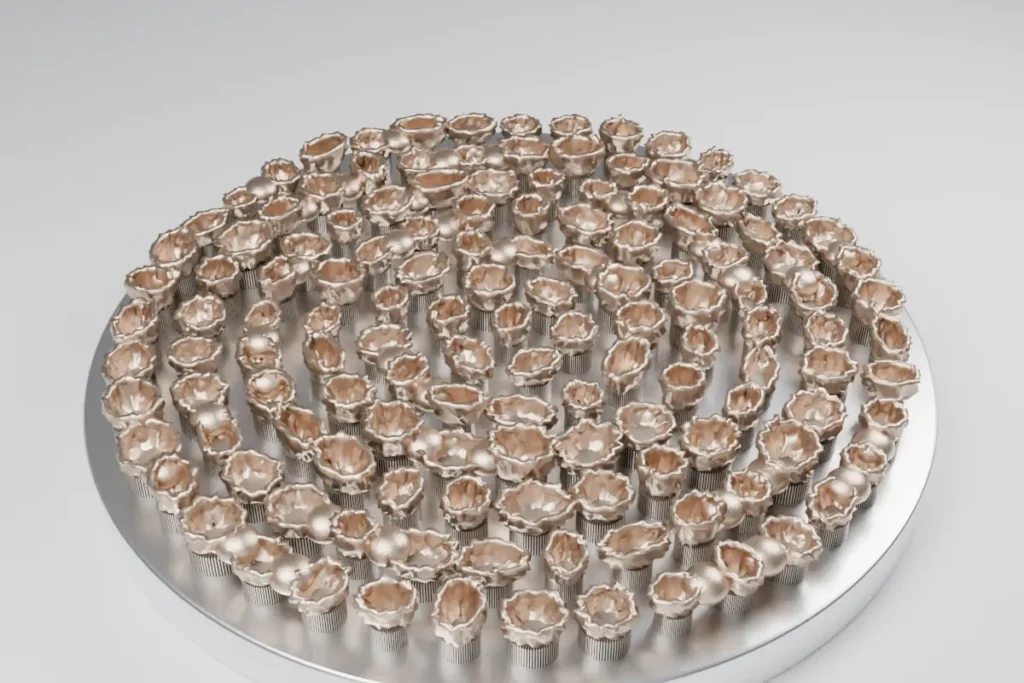
In digital dentistry, metal additive manufacturing turns a CAD design into a metal framework layer by layer. Cobalt-chromium (CoCr) alloys are among the material families evaluated for crown and bridge frameworks and removable partial denture frameworks. The starting point is not just the alloy name but the restoration to be produced and a validated production chain.
Three applications, three different evaluations
- Crown framework: marginal fit, minimum wall thickness, surface quality and the ceramic system to be applied are evaluated together.
- Bridge framework: connector areas, span, support placement and distortion after heat treatment become important. A parameter set that works for a crown may not be sufficient for every bridge geometry.
- Removable partial denture framework: the major connector, clasps and rests have different mechanical functions. Geometry, flexibility and fatigue behaviour must be validated together.
3D Systems defines dental applications for certain LaserForm CoCr products. This example does not mean that all CoCr powders have the same scope of use. The current instructions for use, composition and process documentation of the product used must prevail. Manufacturer material example: LaserForm CoCr.
From powder to a deliverable restoration
A typical workflow consists of scan and design check, build layout, support design, laser powder bed fusion (LPBF), appropriate heat treatment, support removal, surface finishing and final inspection. The sequence and values are set by the validated procedure of the chosen material–machine system. Instead of copying another manufacturer’s laser or heat treatment settings directly, build evidence for your own production chain.
The example published by Renishaw and Egan Dental Laboratory shows digital design and LPBF production being developed together for CoCr removable dentures. The lesson is that success comes not from a single powder purchase but from a process improved with laboratory feedback. This example is not a PRODA METAL customer project. Renishaw case study.
What data should you request when buying dental CoCr?
Product code and chemical limits, batch certificate of analysis, particle size distribution, evidence of machine compatibility, heat treatment condition and instructions for use should be in the same file. Different compositions such as CoCrMo and CoCrW should not be considered automatically equivalent. For frameworks to be veneered with ceramic, ceramic–metal compatibility is evaluated separately.
ISO 22674:2022 provides a framework of requirements and test methods for relevant dental metallic materials. Citing a standard name does not by itself prove that a product is certified or suitable for every indication.
Example pilot: a laboratory evaluating a new powder
Start with a single restoration group. Keep the current material as a reference; record the new powder’s batch number, print settings and all post-processing. After evaluating fit, surface and the required mechanical checks, confirm repeatability with a different production batch. Do not limit the commercial comparison to price per kilogram: calculate remakes, finishing time and cost per accepted restoration together.
Application note: This content is for preliminary material and production evaluation. Dental use is assessed within the scope of the product’s intended use, its documents and a validated process.
Back to the medical and dental application guide or request a quote for your dental CoCr needs. State the restoration type, machine, particle size, quantity and document requirements in your request.